I've witnessed things you wouldn't believe.
I've seen attack ships burning beyond Orion.
I've observed C-beams shimmering in the darkness near the Tannhäuser Gate.
All these moments will fade with time, like tears dissolving in rain.
The time has come to die.
Blade Runner.
I've experienced the most incredible sunsets you could ever imagine.
I've viewed the moon from close quarters.
I've stood beneath the world's tallest trees.
I've experienced and survived the planet's wildest tropical rainstorms.
I've witnessed lightning strike and obliterate a hut.
I've explored the most beautiful yet dangerous beaches on Earth.
I've encountered and coexisted with the largest and most hazardous insects in the world.
I've observed and lived alongside wild animals.
I grew up free, in the jungles of Black Africa.
Elobey Grande.
All these moments will fade with time, like tears dissolving in rain.
The time has come to die.
http://www.youtube.com/watch?v=5BIakRTq25E
Equatorial Guinea experienced nearly two centuries of history within the Spanish realm, including one hundred and ten years of actual governance. This appeared as a strange mirage, unfamiliar to most of the population, occurring when the empire's remnants were already distant, painful memories. Estimates suggest that during this extensive period, barely more than 50,000 Spaniards ever set foot on this African territory. Spain's belated African colonial ambitions, administrative neglect of the colony, and challenging living conditions delayed its full incorporation into the Spanish project until the early twentieth century. Economic maturity wouldn't arrive until the 1940s.
Multiple generations shared the dream of Black Africa for one hundred and ninety years. This chapter should endure in Spanish historical memory as a meaningful episode of an empire that circumstances prevented from fully materializing, hindered by the selfishness of major colonial powers. Nevertheless, Spain contributed enormous sacrifice and the blood of many of her sons. The final chapter of relations between Spain and Equatorial Guinea—autonomous since 1964 and independent since October 12, 1968—remains far from being written. Spaniards must turn their attention back to their former territories, acknowledging both the mistakes and virtues of colonization.
Chronicle of Equatorial Guinea. Published by Sial/Casa de África. J.L. Centurión.
Present-day Equatorial Guinea comprises its continental area, Río Muni, along with the islands of Fernando Poo (now Bioko), Annobón, and smaller islands (Corisco, Elobey Grande and Chico, etc.) off the Río Muni coast. The mainland and islands are relatively distant from each other and experience considerable differences in population, economy, and history.
Río Muni occupies most of the country (93% of the territory), though historically it wasn't the primary economic zone. The center was located on Fernando Poo island, where the colonial and national capital Santa Isabel (currently Malabo) stood until 2000. Only after independence in 1968 did the continental zone gain greater importance, primarily because both presidents have originated from this region.
In the continental zone, soils are poor, limiting agriculture to small-scale operations. Hunting has therefore always played an important role. Dominated by tropical forests and agricultural conditions that encouraged semi-sedentary communities, population density remained low with few conditions facilitating stable settlements or kingdoms. On Fernando Poo, soils are somewhat richer due to the island's volcanic nature, but excessive rainfall across most of the island and mountainous topography restricted agriculture to limited areas until the mid-1940s, when intensive plantation agriculture developed under colonists, many of them Catalan.
Two peoples dominate their respective regions in Equatorial Guinea. The Fernando Poo island population are the Bubi (also called Isleños). They were probably the first arrivals on the island and the sole inhabitants until European contact brought external interactions. During centuries of interaction between Bubi, Europeans, and West Africans (imported labor), a Creole population emerged—the Fernandinos. From the twentieth century onward, increasing numbers of Fang from the Río Muni zone began relocating to the capital as well.
The Fang people dominate the continental Río Muni zone and are the most widespread group in Equatorial Guinea. The Fang also populate extensive areas in Cameroon and Gabon.
I lived in villages (outposts) on both the continent (Río Muni) and Fernando Poo (Island), though never in the capitals—always deep in the jungle. On the continent, in many outposts: Río Benito, Evinayong, Sevilla de Niefang, Micomeseng, Ebebiyin, and Cogo, situated at the Río Muni estuary near the Islands of Elobey Grande and Elobey Chico (uninhabited at that time) within Cogo's jurisdiction and accessible by motor-powered cayuco. On the Island, in San Carlos, in the upper volcanic region called Moca where O.J.E. camps were established. I also visited Corisco, another island.
The climate is tropical, naturally, with periods of heavy rainfall. Average temperatures are high, and until acclimation, the sensation is unbearably sticky heat. Wearing a Sarakof (with ventilation holes) was mandatory for protection, typical of colonial territories not just in Equatorial Guinea. Protection against "come come"—clouds of mosquitoes preceding rains—was also essential. Among insects, perhaps the most bothersome were "niguas" (larvae-like) that burrowed into toenails; only an expert African with a bamboo stick could resolve the problem. I was a regular patient, constantly living outdoors and traversing humid terrain. Dangers were everywhere—a hairy spider larger than my hand could kill quickly, though I must acknowledge they were extraordinary, unusually beautiful, highly prized by collectors worldwide. My mother packaged and mailed them to those who requested them, but those are other stories without place in this article.
During the years I lived there (late 1950s until 1967), Equatorial Guinea possessed such a prosperous economy it became Africa's wealthiest nation. Exports of cocoa, coffee, precious woods (ebony, rosewood), cotton, tropical fruits (bananas, papayas—nothing like those here—pineapples, also incomparable), and abundant fishing (including sharks) achieved this economic miracle. Petroleum's existence was known but never exploited. North Americans were the principal buyers. It was curious because while arriving with cargo ships to collect products, they simultaneously conducted business with us, selling clothing, electrical appliances, food items—things not yet known in the peninsula (Spain).
As in any Spanish province, laws and social structure were identical for everyone, blacks and whites. Good evidence of this is the implementation of the same organizations existing in the peninsula, one being the Spanish Youth Organization (OJE), but Guinean. During those years there was a Civil Governor and a Military Governor; initially the position fell to the same person, but later, in the early 1960s and especially mid-decade, they were separated. When autonomy was granted to the territory around 1964, the position went to Bonifacio Ondó Edú or Federico Ngnomo—I don't remember which—in any case, both were persons with sufficient preparation acquired at university in Spain, like many others who through the scholarship system of those years could access and complete higher education.
We can examine a series of photographs to verify this.
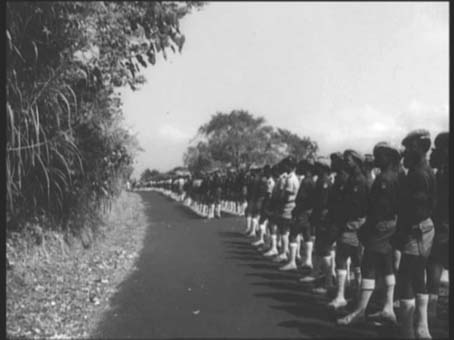
Photo 1: A magnificent formation of Guinean comrades.
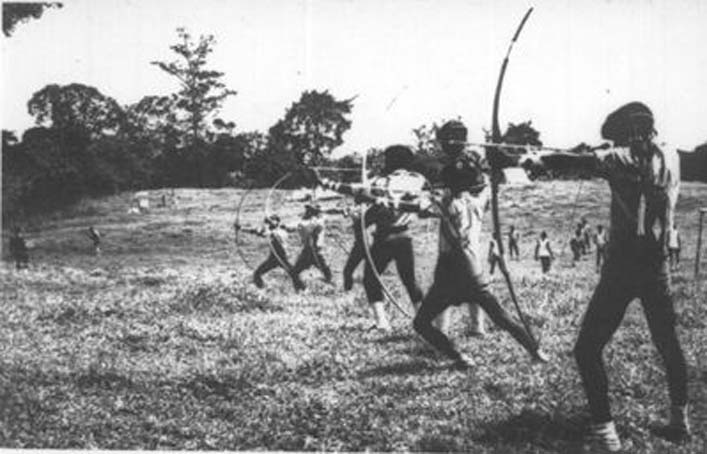
Photo 2: Archery exercises.
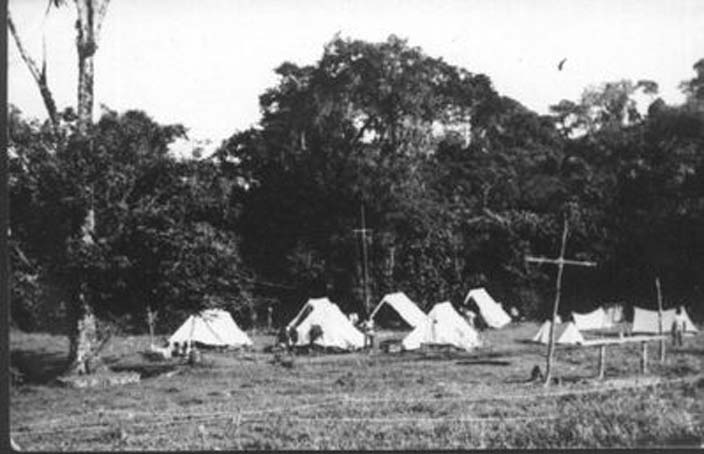
Photo 3: Campaign tents at the OJE camp in Moca, Santa Isabel, Fernando Poo.
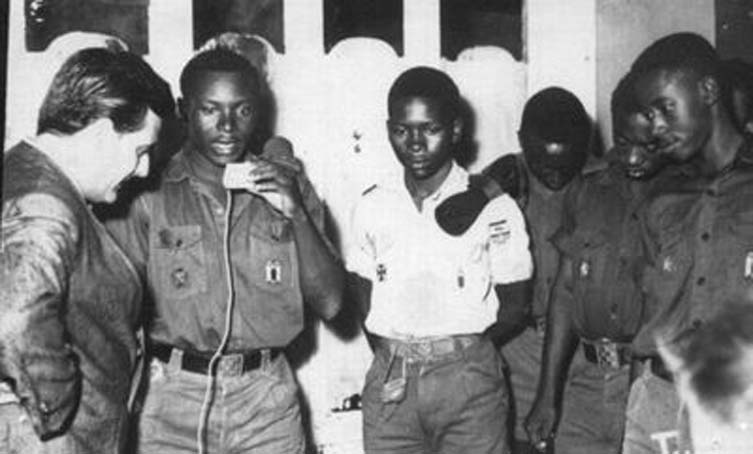
Photo 4: OJE commanders.
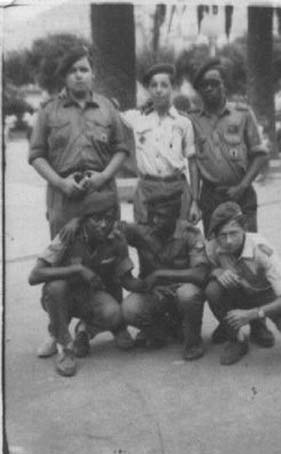
Photo 5: Typical photo of coexistence. Everyone equal.
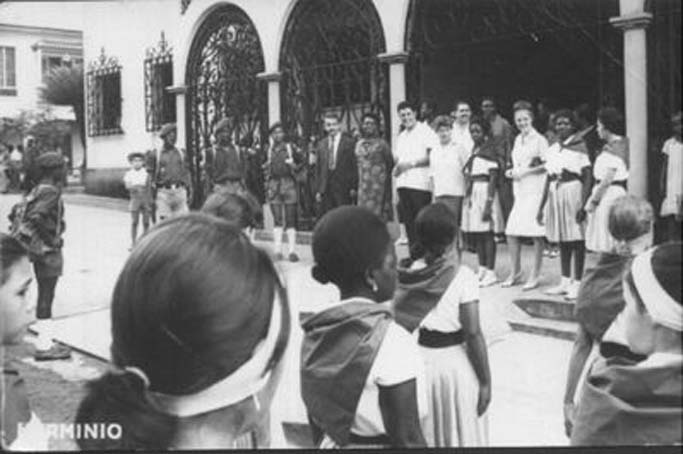
Photo 6: The Women's Section was also present with its commanders.
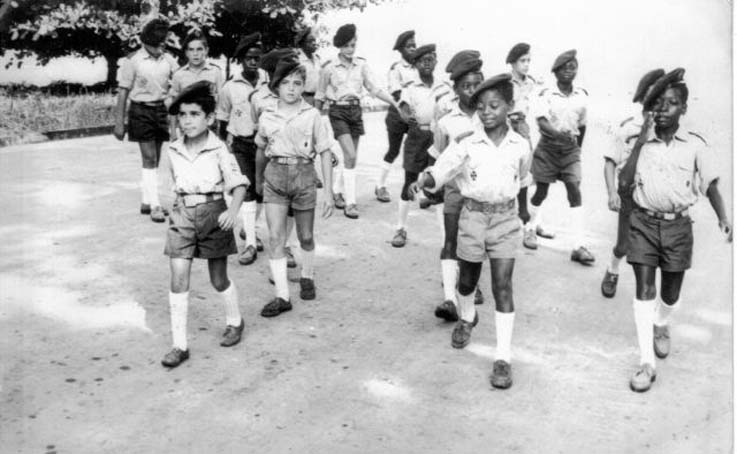
Photo 7: From childhood, all equal.
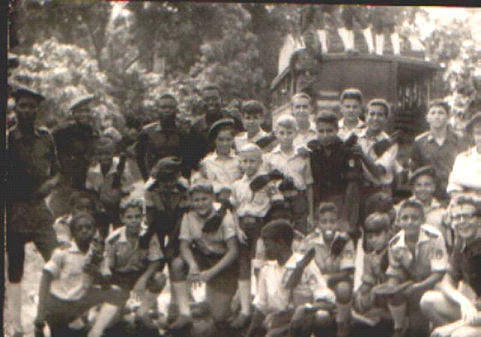
Photo 8: Together and mixed, with commanders.
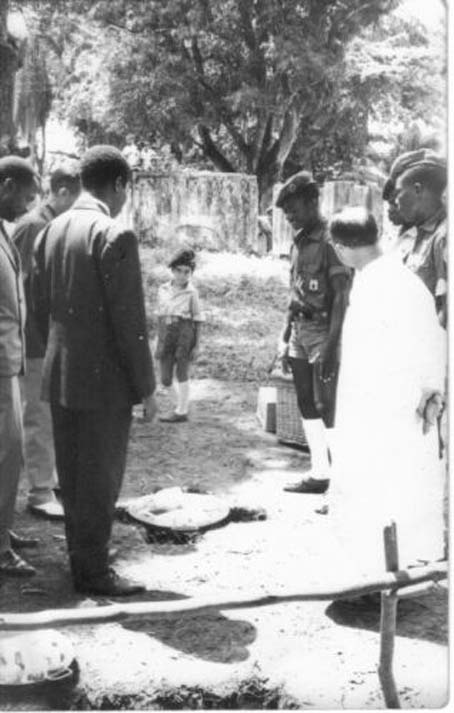
Photo 9: Important photograph, I believe it's Bonifacio Ondó (I don't remember him well), in jacket, visiting an OJE camp. During one of his visits to the interior villages (outposts), he gifted me a kid goat. I trained it and it followed me everywhere. I also had a chimpanzee named Carlota with incredible strength—when she wrapped around my legs there was no way to free myself. I also had titis, parrots, and various other "creatures," but that's another story, too.
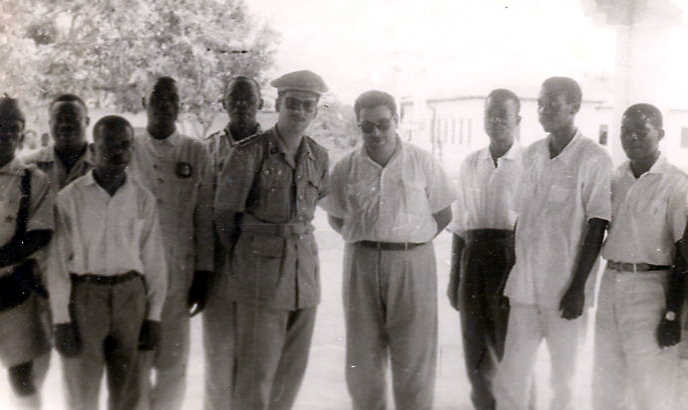
Photo 10: My father in Army (Air Force) Captain uniform, 3rd class from the San Javier general academy, 2nd class of paratrooper knights (over 500 jumps, from that era), veteran of the Ifni war.
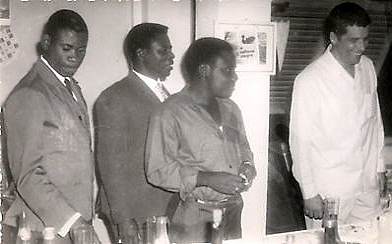
Photo 11: My father serving as governmental delegate at one of the outposts. They were responsible for law and order in the assigned zone, commanding a territorial guard detachment and a small civil guard grouping, always in Río Muni (continent) and in the jungle interior. In coastal zones there were also marines, but that's another story, too.
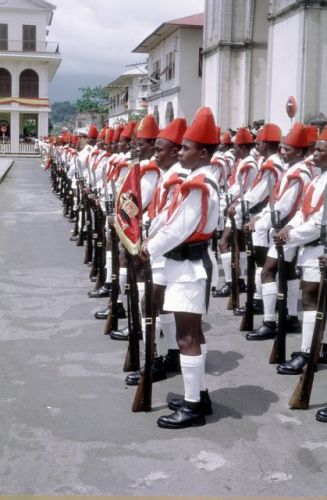
Photo 12: Territorial Guard.
Finally, a very typical photograph.
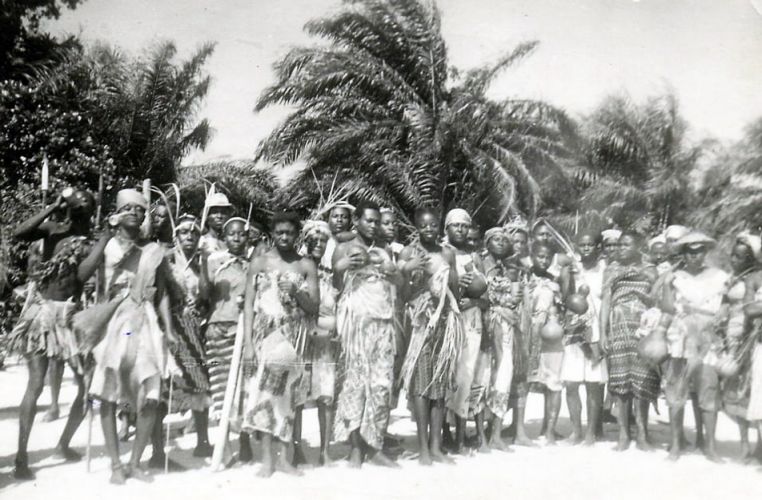
Photo 13: A "balele." Typical Guinean festivals.
Without setting a precedent.
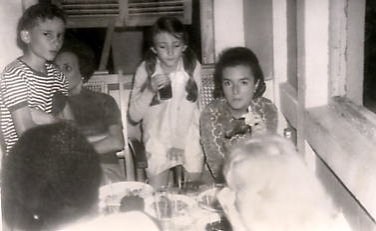
Photo 14: Myself
With a questioning expression. I don't remember very well but I believe it was in Cogo (Río Muni) or in San Carlos, Fernando Poo (Island). At that age I should have been on my sixth tetanus vaccination and had already experienced anopheles mosquito fevers (malaria). Thank God I was never bitten by the tsetse fly (sleeping sickness)—there was no cure. A curiosity: I cannot donate blood as I could transmit malaria; I'm a carrier. I brought something back.
In 1968, due to pressure from that nefarious supranational organization full of corrupt bureaucrats and kleptocrats, responsible for millions of African deaths—called the U.N.—the Spanish government was pressured to declare the territory's independence under a presidential electoral system. And of course, the wrong person emerged victorious: Francisco Macías, a poorly prepared office worker from the Fang majority, instead of Bonifacio Ondó, a prepared man. Miracles of democracy.
And here the story ended. The few Spaniards who endured in Guinea had to flee. Some passed through prison under terrible conditions, and I recall that when they returned from Guinea they arrived stripped of everything, coming literally with just the clothes on their backs. The last Civil Guard numbers, according to their accounts, exited the airport runway under gunfire.
To conclude this account of a "small Spanish infant's" memories in Africa, two brief notes.
When I arrived at the peninsula (Spain), the only thing I enjoyed was discovering the elevator. I spent several hours going up and down in that infernal contraption.
A paragraph from J.A.P.R.
Simply because we understand that a nation is not merely the attraction of the land where we were born, not that direct and sentimental emotion we all feel in proximity to our homeland, but rather a nation is a unity in the universal, it is the level a people reaches when fulfilling a universal destiny in History. Therefore, because Spain fulfilled its universal destinies when all its peoples were united, because Spain was a nation facing outward, which is how one truly becomes a nation, when Basque admirals traversed the world's seas in Castile's ships, when admirable Catalans conquered the Mediterranean united in Aragon's vessels, because we understand it this way, we want all the peoples of Spain to feel not just the elemental patriotism that draws us to the land, but the patriotism of mission, the patriotism of transcendence, the patriotism of the great Spain.
Indeed, when all Spaniards share a common "mission," we will once again become an "empire."
http://www.youtube.com/watch?feature=endscreen&v=oag1Dfa1e_E&NR=1
Though we could also present this other one—we deserve it. We are Europe's oldest nation, politically, economically, and socially, and that means the World's, and furthermore, we were an "empire."
http://www.youtube.com/watch?v=QPYL9swf2_k&feature=endscreen&NR=1
But that's another story, too.
Farewell, Spanish, from Equatorial Guinea, rebellious and free.
Café
Strength and honor.
"Ambolo" goodbye, see you later in the Bubi language.
Article/Photo-Report/Musical by Francisco Visedo Núñez.
8 responses to "Our Comrades in Africa: Equatorial Guinea"
I spent a year living in Guinea, I believe it was in 1988. I passed a wonderful year, though unfortunately I experienced firsthand the tyranny of its rulers. The common people were truly delightful, longing for the Spaniards' return. Unforgettable.
Hello Abe, that's right, the common people remember us, with few exceptions, fondly.
You're now in another paradise, enjoy.
Farewell, a very strong embrace.
Cafe
Strength and honor
Many thanks for this formidable chronicle. I have a good friend from the Fang tribe who has resided in Barcelona for several years, having managed to escape present-day Guinea's inferno. Guineans who lived through the "colonial era" say they didn't feel like a colony of Spain but rather a Spanish territory like any other. They long for those times, as could not be otherwise. Ambolo Visedo
You err in one thing, just one: those moments won't be lost like tears in rain. They won't be lost because, besides in your memory, they're preserved in the memory of good people, of whom there are many; in Spain's memory; and above all, in God's memory, who doesn't forget what was done with good will.
Akiba.
Very beautiful. Endearing.
Good family, the Visedos in Aviation. I served under orders of the man who later became Colonel of the squadron at the former Air Ministry; I knew him as Captain, Visedo, of the Squadron in '83; I served under his orders in State Staff Counter Intelligence (Current section or "office" of the Air Intelligence Center now assigned to Torrejón base) when he was Commander. Since I was assigned to Transmissions Service, State Staff Cipher and S.I.T.M.. If you're family of this aviation branch, greetings..
Not a single error, all correct.
I'm his son.
Farewell, an embrace
Cafe
Strength and honor
Life and the world are very small, congratulations on being the son of a great man, and a great soldier...
Leave a comment