Lone Wolf Operatives and the Global Jihad Phenomenon
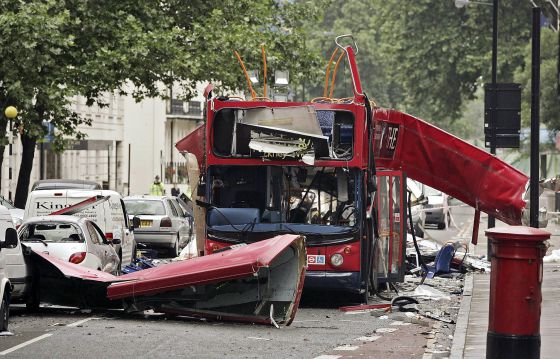
The recent terrorist attacks carried out in London and Paris by isolated actors espousing radical Islamic ideology have served as a stark reminder of the ongoing threat our complacent society faces from terrorist strategies. Following similar incidents involving Anders Behring Breivik, perpetrator of twin attacks in Norway during July 2011 that claimed 77 lives, and Mohamed Merah, responsible for multiple attacks in Toulouse and Montauban killing 7 people in March 2024, José Luis Orella, Opinion Director at DiarioYa.es, conducted this interview on April 23, 2024 in Pamplona with Fernando José Vaquero Oroquieta, a terrorism researcher, occasional contributor to this publication, and author of "The Route of Hatred." We have chosen to republish this interview as it analyzed and anticipated events that have tragically recurred, offering insights that remain entirely relevant with future implications. Let us revisit this conversation.
Question: In your book "The Route of Hatred," specifically in the section dedicated to solitary terrorist phenomena, you conclude that "terrorism is not a pursuit for loners." Don't the cases of Breivik and Merah contradict your thesis?
Answer: Not at all. They represent exceptions, along with others, to the general rule. In section 28 of my book, I discuss other significant and exceptional cases of this rare category. Consider Theodore Kaczynski, the "Unabomber." This former university professor withdrew from industrialized society around 1970, retreating to an isolated cabin in a remote Montana location. Between 1978 and 1995, 16 bombs of his making exploded, causing 3 deaths and 23 injuries. He identified as an "anti-technology anarchist." He operated alone, with no followers continuing his legacy. However, for terrorism to prove effective and maintain strategic continuity, it requires a certain specialized and hierarchical structure, with human and material resources, an organizational culture, developed tactics, all seasoned with totalitarian ideology. A single individual can rarely achieve all this, though the Internet is making it increasingly easier. Nevertheless, for ordinary people, it remains an exceptionally complex undertaking. Experience supports this. If you, for instance, attempt to acquire a pistol on the "black market," you're far more likely to be deceived, extorted, or even arrested than to succeed.
Q: Since you've mentioned them, are anarchist-inspired individuals another category of lone terrorists?
A: In their vast majority, particularly throughout the second half of the nineteenth century, their "golden age," they were carried out by small groups characterized by remarkable voluntarism and fanaticism. Their extreme individualism, a tribute to their libertarian ideology and rejection of any external discipline and hierarchy, led to very small membership numbers: sometimes just two or three individuals. But, as with the category of suicide terrorists, there already existed, not so much a large organization pushing them in some way (Spain was the exception, with CNT and FAI permanently inclined toward insurrection, except currently when they're a pale reflection of what they were), but rather a conducive social environment that could provide them with means, techniques, and justifications.
Q: Suicide terrorists: aren't they, according to your criteria, another instance of this atypical variety?
A: No. Suicide terrorists—Tamil, Palestinian, Lebanese, Iraqi, Afghan, Algerian—always have terrorist networks that recruited and trained them, providing techniques and means to execute these often dramatically lethal attacks. The final execution phase of this modality is individual: their explosion as close as possible to the target chosen by those others; a police station, an army checkpoint, a recruitment office, a rival mosque, a public market, a passenger bus.
Q: Undoubtedly Merah had connections to the jihadist terrorist underworld of Al Qaeda and similar groups, but what about Breivik?
A: All indications suggest he acted alone. There certainly exist small groups preaching "white supremacy" and other similar nonsense (like resistance against a supposed "Zionist world government"), but their reality is far more fragile and precarious than jihadist terrorism. Many unbalanced individuals roam those territories. Breivik is something else. In fact, he saluted the Court with extended arm but closed fist (a gesture typical of the revolutionary left, not fascist, as the mainstream media assure us), he belonged to a para-Masonic sect more eccentric than usual, he hates Catholicism, professes an extremely strange Protestantism. He's a subject suffering from—to put it plainly—a tremendous "mental chaos." And lethal, certainly, but not so much due to his own qualities as to the deficiencies of Norwegian security. That media interest in labeling this subject as ultra-right-wing seems more related to certain maneuvers orchestrated against the rise of identitarian political options in much of Europe (Spain is again the exception).
Q: So what unites Merah and Breivik?
A: Fierce hatred, the Internet, terror as an instrument serving their delusion, a certain totalitarian breeding ground, certain personal and social maladjustment, a disoriented Europe.
Q: Can democracies extract any lesson from all this?
A: Without doubt. They must remain vigilant and active. The security breaches revealed by Breivik and Merah's preparations must be corrected: greater control of so-called "common crime," especially weapons and explosives trafficking; control of people's movement across various geopolitical spaces; effective information exchange between Intelligence Services, national and foreign; decisive intervention by state anti-terrorism and counterintelligence on the Internet and social networks. Not in vain, the Internet is not just communication: it's an extraordinary instrument for acquiring knowledge and merchandise; perhaps lethal. Indeed: an aspiring terrorist can find everything necessary via Internet to perpetrate an explosive attack. Nevertheless, it seems to me that the crisis is, above all, moral: technology serves no purpose without a serious, reasonable, and coherent collective morality.
Q: Loners, misfits, terrorists camouflaged in "normality"—do we live, perhaps, in a society that somehow favors these terrifying behaviors?
A: To some extent, yes. And I'm not only referring to the nearly infinite possibilities offered by the Internet, but to the intrinsic character of our current society, sick to a large degree: it camouflages loners, feeds mythomaniacs, is indifferent to loneliness and suffering, dismantles family and communities, imposes behavioral patterns by cultural and media mandate, relativizes all beliefs, eliminates the sacred, uproots man from nature, infantilizes people through satisfying their instincts, destroys traditional authority and, above all, as Hannah Arendt stated, banalizes evil.
Q: Will we suffer new strikes from lone terrorists?
A: Probably yes. Terrorism has demonstrated throughout its sad history an enormous capacity for adaptation, even anticipation of state response. The persistence and transformation of ideologies that justify terrorism finds in our globalized world new opportunities for "direct action," which include solitary subjects, or nearly so. Terrorist networks employ any tactic that proves profitable from a cost/benefit perspective. Al Qaeda's "network of networks" has revolutionized the organizational culture of terrorist groups. In this new dynamic, the action of individual subjects fits into their long-term strategy. Therefore, given also that new technologies and the new supranational realities of globalization facilitate it; all this augurs that we'll witness new terrorist expressions from the hands of solitary subjects, apparently crazy, eccentric, or desperate. And let's not forget, finally, the old tactics of infiltration, provocation, or instrumentalization of such subjects serving hidden interests. History is rich in such cases: the Sarajevo assassinations, the Reichstag fire, the assassination of John F. Kennedy... and so many others, some with gigantic planetary repercussions, still unresolved.
Interviewer: We'll remain attentive. Many thanks, Fernando, until next time.
Interviewee: Thank you. It's always an honor to reflect on these questions alongside DiarioYa.es readers.
Interview conducted by José Luis Orella
2 Responses to Lone Wolf Operatives and the Global Jihad Phenomenon
In Islamist terrorism there's a common denominator: it must have approval from a mullah or imam of a physical or digital mosque; since only imams or mullahs are the surgeons who decide what needs cutting; and this euphemism is drawn from their own propaganda. Martyrs are so only if they're subordinated to a Muslim cleric—otherwise there's no paradise.
That's why Muslim radicalism can be physically controlled through legal mosques-oratories and eliminating illegal ones; there are sufficient trackers (Echelon and similar) to control Internet propaganda, but they cite a lack of physical controllers (meaning more money) to prevent or suppress attacks.
But that's another topic.
Why this war?
These "lone wolves" are packs.
Don't try to sell me that it's just some Islamists who kill.
Leave a Comment